For a business that only sends a handful of letters occasionally, buying stamps is simple enough. But as outgoing mail volumes increase, managing stamps, calculating postage and preparing individual mail pieces can become an inefficient use of staff time.
A postage meter provides an alternative by allowing businesses to calculate and apply postage directly from their workplace.
So when does it make sense to move away from traditional stamps and start using a postage meter?
What Is a Postage Meter?
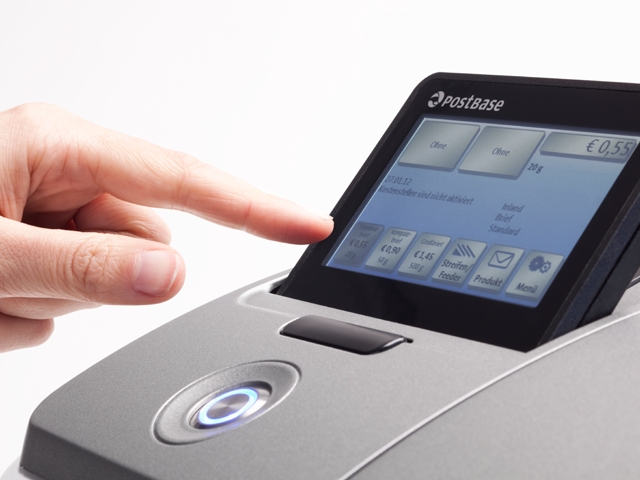
A postage meter is a specialised machine used by businesses to prepare outgoing mail.
Instead of attaching a physical postage stamp to every envelope, the machine applies an approved postage impression or label showing that the required postage has been paid.
Modern postage meters can also help businesses calculate the correct postage based on factors such as the weight and type of mail being sent.
For organisations processing regular volumes of outgoing mail, this can make everyday mail preparation significantly easier.
Postage Meters vs Traditional Stamps
Both methods ultimately perform the same basic job — paying for postage.
The difference is in how the mail is processed.
With traditional stamps, a business needs to purchase and maintain a supply of different stamp denominations and manually apply the appropriate postage to each item.
With a postage meter, postage can be calculated and applied as part of the mail preparation process.
The greater the volume of outgoing mail, the more noticeable this difference can become.
Reduce Time Spent Preparing Mail
One of the biggest potential advantages of a postage meter is staff time.
Imagine an office preparing hundreds of outgoing letters.
An employee may need to determine the appropriate postage, locate the correct stamps, apply them to individual envelopes and keep track of the organisation’s remaining stamp supply.
None of these jobs is particularly difficult.
But when repeated hundreds or thousands of times, they can become a considerable administrative task.
A postage meter can streamline much of this process and allow larger quantities of mail to be prepared more efficiently.
Apply the Correct Postage
Applying incorrect postage can create unnecessary costs.
If too much postage is applied, the business may be paying more than necessary.
If insufficient postage is applied, the mail may be delayed or require additional handling.
Postage meters with integrated weighing and postage calculation capabilities can help businesses determine the appropriate postage for different mail items.
For organisations sending mail of different sizes and weights, this can be particularly useful.
Better Control Over Postage Spending
Physical stamps can be surprisingly difficult to monitor in a busy workplace.
They need to be purchased, stored and distributed, and it may not always be obvious how much the organisation is spending across different departments or mailing activities.
Postage meter systems can provide businesses with greater visibility over their postal expenditure.
Depending on the system being used, reporting features may allow postage costs to be monitored or allocated to different departments, clients or cost centres.
This can be valuable for organisations that need better control over operating expenses.
A More Professional Appearance
Business correspondence is often part of the customer’s overall impression of an organisation.
Postage prepared using a postage meter can provide a clean and consistent appearance across outgoing business mail.
For organisations sending invoices, financial documents, legal correspondence, customer notices or other professional communications, consistency can be an additional benefit.
Who Can Benefit From a Postage Meter?
Postage meters can be useful for organisations across many industries, including:
- Accounting and financial services businesses
- Legal practices
- Healthcare organisations
- Government departments
- Schools and educational institutions
- Insurance businesses
- Real estate businesses
- Charities and associations
- Corporate offices
- Businesses sending regular customer correspondence
The deciding factor isn’t necessarily the type or size of business.
It is primarily the volume and frequency of outgoing mail.
When Are Stamps Still the Better Option?
A postage meter isn’t necessary for every business.
If your organisation only sends a few letters each month, traditional stamps may remain the simplest solution.
There is little value in introducing mailroom equipment when the volume of mail does not justify it.
However, once employees regularly spend significant amounts of time preparing outgoing mail, it becomes worth considering whether the process can be automated.
When Should You Consider a Postage Meter?
It may be worth investigating a postage meter if your business:
- Sends substantial quantities of mail each week or month
- Regularly sends items of different weights or sizes
- Spends significant staff time preparing outgoing mail
- Needs greater visibility over postage expenditure
- Frequently needs to purchase or manage physical stamps
- Wants a more streamlined mail preparation process
One useful approach is to calculate how many staff hours are spent preparing outgoing mail each month.
The cost of mail processing isn’t simply the price of postage — the employee’s time is part of the cost as well.
Combining a Postage Meter With Other Mailroom Equipment
A postage meter can also form part of a broader mailroom workflow.
For example, businesses processing large quantities of correspondence may use a folding machine to prepare documents before they are placed into envelopes.
Postage can then be calculated and applied using a postage meter.
Instead of employees manually completing every stage, different parts of the workflow can be automated.
This becomes increasingly valuable as mailing volumes grow.
Is It Time to Move Beyond Stamps?
Traditional stamps remain perfectly suitable for businesses with small or occasional mailing requirements.
But they aren’t necessarily the most efficient way to process hundreds or thousands of pieces of business mail.
A postage meter can help streamline mail preparation, improve postage accuracy, provide greater visibility over postal expenditure and reduce repetitive administrative work.
If your organisation regularly processes significant volumes of outgoing mail, comparing the cost of your current manual process with an automated postage solution can help determine whether it is time to move beyond traditional stamps.