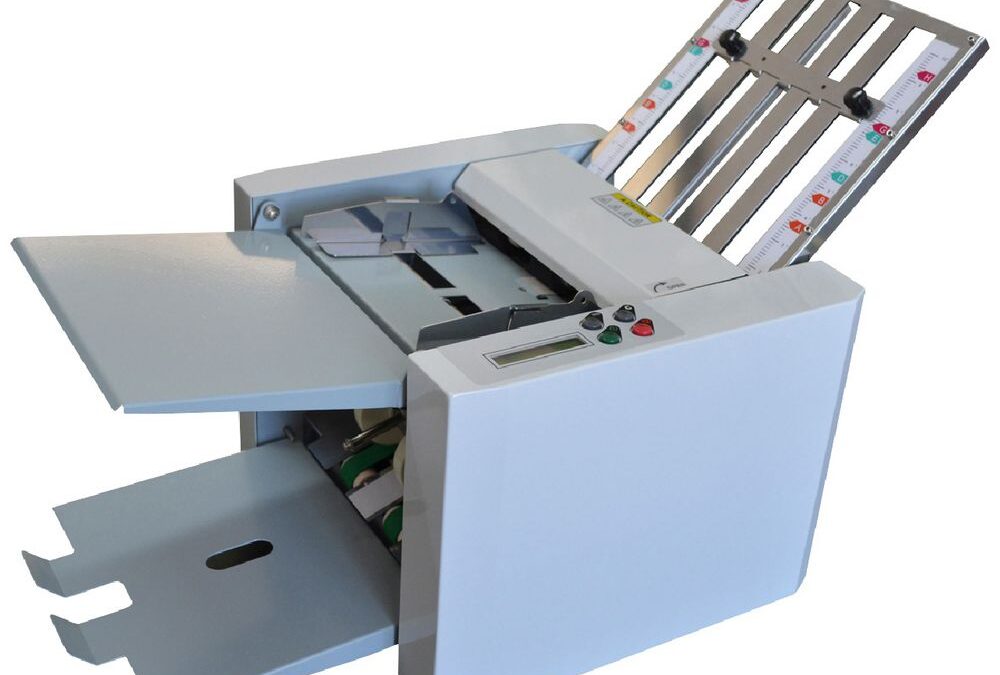
In offices, print shops, and mailrooms, efficiency is key. One device that can save hours of manual work is the folding machine. Designed to automatically fold paper, these machines streamline operations and improve productivity.
What Is a Folding Machine?
A folding machine is a device that automatically folds paper into specific shapes, such as letters, brochures, or pamphlets. Unlike manual folding, which can be time-consuming and inconsistent, folding machines deliver fast, precise, and uniform folds.
They are essential for businesses that handle large volumes of documents, such as invoices, marketing materials, newsletters, or direct mail campaigns.
Types of Folds
Different projects require different folding styles. Common fold types include:
-
Letter Fold (Tri-Fold): Divides the paper into three equal sections, commonly used for letters or brochures.
-
Half Fold: Folds the paper in half, creating a booklet-like format.
-
Z-Fold: Creates a zigzag pattern, ideal for brochures or leaflets.
-
Double Parallel Fold: Folds the paper twice in the same direction, used for more complex documents.
Most modern folding machines allow users to select the fold type and adjust the settings to match paper size and thickness.
Benefits of Using a Folding Machine
-
Time-Saving
Folding hundreds or thousands of papers manually can take hours. A folding machine can handle large volumes in minutes. -
Consistency
Every fold is precise and uniform, giving documents a professional appearance. -
Versatility
Folding machines can handle different paper sizes, weights, and fold types, making them suitable for a variety of tasks. -
Reduced Labor Costs
Automating the folding process frees up staff to focus on other important tasks, improving overall productivity. -
Professional Results
A crisp, clean fold enhances the presentation of letters, brochures, and marketing materials, leaving a positive impression on clients or recipients.
How to Choose the Right Folding Machine
When selecting a folding machine, consider:
-
Volume of work – Light-duty machines are suitable for small offices, while heavy-duty machines handle high-volume commercial tasks.
-
Paper size and type – Ensure the machine can fold the paper you use most often, including heavier stock or envelopes.
-
Fold types – Some machines offer multiple fold options, while others may only do basic folds.
-
Speed and efficiency – High-speed machines save more time for larger projects.
-
Ease of use and maintenance – Look for machines that are user-friendly and easy to clean or service.
Tips for Efficient Folding
-
Always align papers neatly before feeding them into the machine.
-
Regularly clean rollers and check for jams.
-
Test a few sheets first to ensure correct fold type and alignment.
-
Use the machine on a flat, stable surface to avoid errors.
Conclusion
A folding machine is more than just a convenience—it’s a tool that enhances efficiency, professionalism, and productivity in any office or print environment. Whether you’re handling a few letters or thousands of brochures, investing in a folding machine saves time, reduces manual labor, and ensures perfect folds every time.