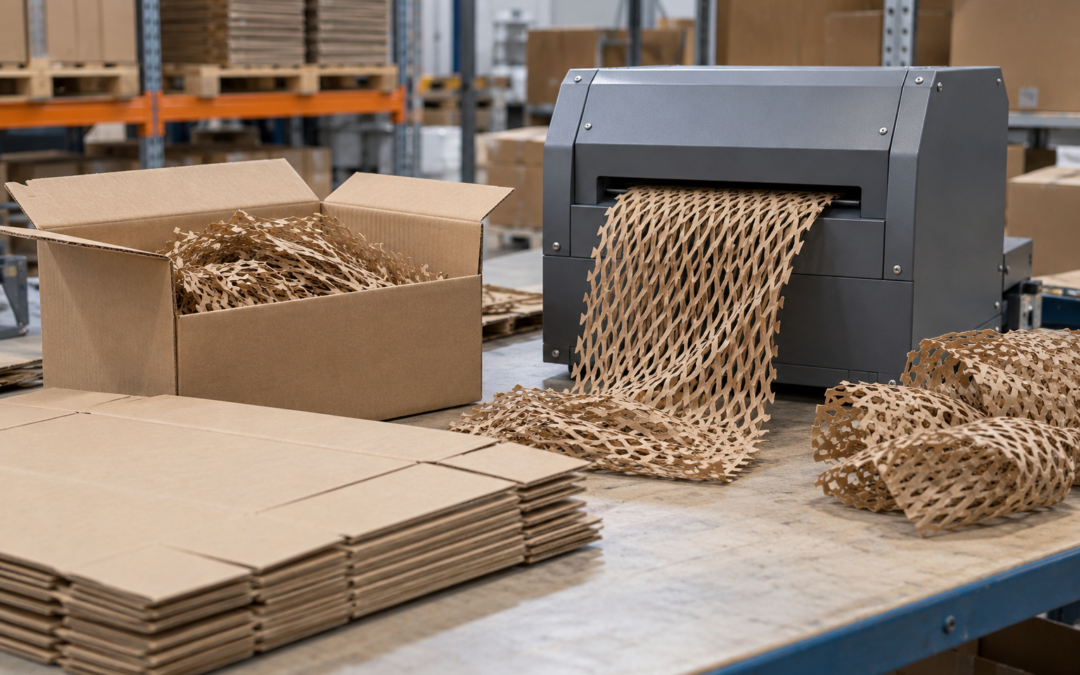
Your latest delivery has arrived, the stock is unpacked, and another pile of empty boxes is heading towards the recycling bin. Could those boxes become protective packaging for your next shipment?
A cardboard shredder or perforator can turn suitable waste cardboard into useful packing material. However, checking what goes into the machine is an important part of getting a consistent result.
Start with clean, dry corrugated cardboard
Corrugated cardboard—the material commonly used for shipping cartons—is a practical starting point. Its layered construction can be processed into flexible packaging material for cushioning and filling empty spaces inside cartons.
Choose cardboard that is clean, dry and free from contamination. Greasy takeaway boxes, damp cartons and cardboard exposed to chemicals are poor choices for packaging products you are sending to customers.
FP Mail supplies cardboard recycling equipment designed to convert surplus cartons into protective packaging for dispatch and repacking operations.
Check the thickness before feeding
Not every cardboard shredder has the same capacity. The maximum material thickness, feed width and permitted number of layers depend on the model.
Flatten boxes and check the operating instructions before processing them. A folded edge or overlapping flap can create a much thicker section than the main panel.
If material does not feed easily, stop and check the cause rather than forcing it through.
What about tape, labels and staples?
Check your machine’s instructions before feeding cardboard containing tape, labels or staples. Do not assume that every model accepts the same attachments.
As a preparation routine, remove loose plastic wrapping, strapping, clips and other foreign materials. Removing address labels also helps avoid passing customer or supplier details on to the next recipient.
For unfamiliar materials, ask your equipment supplier before processing a batch.
Keep unsuitable materials separate
A cardboard shredder should not be treated as a general waste processor. Keep plastic packaging, fabric, timber and other unrelated materials out unless the manufacturer expressly approves them.
Set aside waxed, laminated or heavily coated cardboard until you have confirmed its suitability.
Check the finished packaging
Before using the output, inspect it for contamination, sharp objects and suitability for the product being shipped. Test your packing method, particularly for fragile, heavy or easily scratched goods.
A simple collection point for suitable cartons can make preparation easier and help staff produce consistent packaging.
Want to turn your used boxes into packing material? Contact FP Mail on 1300 943 274 or email in**@********om.au to discuss a cardboard shredder for your business.